

Inside secure destruction: what happens to a recalled airbag
From pick-up to destruction certificate, how Lacero Solutions safely deactivates recalled airbags and seatbelt pretensioners and recovers their materials.
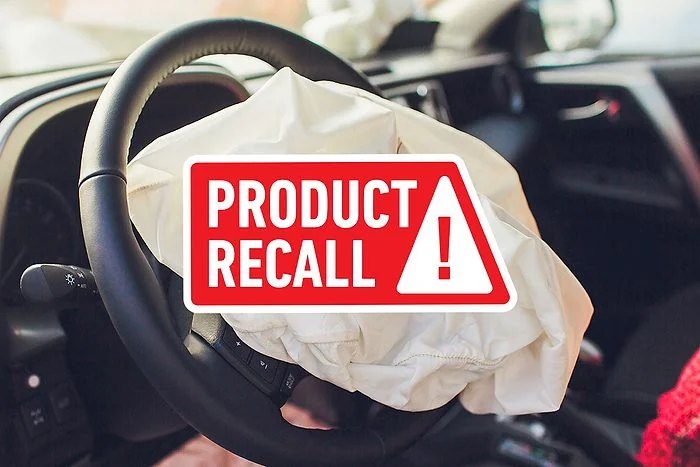
The global Takata recall changed what automakers have to do with airbags. More than 100 million defective airbags had been recalled worldwide by 2022, about 70 million of them in North America, and recalls of other makes continue at roughly a million units a year. Every one of those units still holds a live charge, is regulated as Class 9 dangerous goods, and must never find its way back into the secondary market.
Lacero Solutions, a CLN company based in Mississauga, Ontario, has specialized in this problem since 2018. Here's what happens to a recalled airbag once it leaves the dealership.
1. Pick-up and secure storage
Lacero collects units from the customer's site and transports them to its secured, certified facility. Customers no longer need large storage areas of their own for recalled airbags and seatbelt waste, and units wait safely until they're processed.
2. Tracked from the first scan
Every unit is barcode-scanned on arrival and tracked in real time through Lacero's in-house inventory and warehouse systems, so customers know where each airbag is at every stage.
3. Safe deactivation
Inflators, full airbag modules (including side, side-curtain and knee airbags) and seatbelt pretensioners are safely deactivated or deployed. Lacero's electro-mechanical process produces no wastewater discharge and minimal air emissions, and all hazardous waste is treated in line with regulations. The same facility handles hard-to-recycle components such as struts, brake boosters and driveshafts.
4. Materials back into the supply chain
Once a unit is neutralized, its reusable materials are recovered and returned to the supply chain rather than sent to landfill. Lacero has recovered more than 1.1 million pounds of reusable material to date, helping customers reach a 100% diversion rate.
5. A certificate for every unit
When a unit is destroyed, Lacero issues a destruction certificate for it. That record proves the part can't be resold, protecting the customer from reputational damage and the loss of intellectual property, and gives recall programs and regulators the traceability they require.
What it means for automakers
With more than 550,000 units handled to date, Lacero helps OEMs and their suppliers cut airbag waste management and storage costs by up to 30%. Its airbag buyback program also helps raise completion rates on recall campaigns. As part of CLN, customers can bring these streams together with the network's other hazardous waste, secure destruction and post-industrial recovery services through a single relationship.